News
News
People
Presentations
After Hours
Calendar
Currencies
Galleries
Advertising
About us
Contact
Adressess
Newsletter
Szczecinbiznes.pl discussion
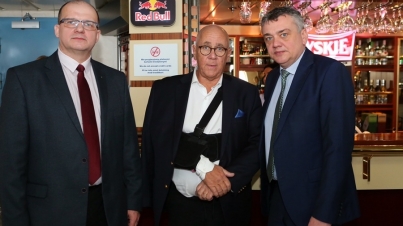
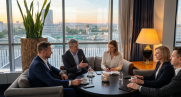
 Ł. Miler, P.Bloch, K.Konieczny i M. Abkowicz /fot.KZ/
This discussion is part of a series of meetings with business people who discuss current events, trends and phenomena in Szczecin, the region, Poland and all over the world. As a website designed for and about business, we want to present opinions of those who are behind the economy of West Pomerania.
This week we are talking to Kinga Konieczny, owner of Konieczny PR, editor of Molo, a magazine about the seaside; Piotr Bloch, Director of Sonion Polska and Łukasz Miler, co-owner of Szczecin Picco, developer of games and social software applications.
Szczecinbiznes.pl: Before we start our discussion, I would like to explain that last week, despite the announcement, Piotr Bloch was not here. He is today, though. And he is excused, because last week his son, Kamil, was born. Congratulations!
Piotr Bloch: Thank you.
Let’s start from the usual question: how are you and how are your companies?
Kinga Konieczny: Summer holidays are over… In July we still had a lot of work, less so Konieczny PR, but the book “Plażownik Zachodni”, which I co-author and which was promoted in July, kept us busy. August though was real holidays. Now, we are getting first orders, so I’m going back to work and I’ve noticed a certain regularity: all requests for proposals concerning media training come from outside Szczecin. Our city gives us mainly promotion orders.
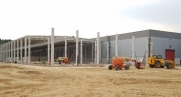
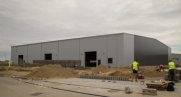
Piotr Bloch: At Sonion, we keep concentrating our activities in a new building, in Tama Pomorzańska. This will have a huge impact on the effectives of our operations, especially the medical branch. We are also still restructuring our business, but I think that the new building will help the company rediscover its identity. Now, it is totally different than a few years ago: much smaller and with different plans for the future.
Łukasz Miler: As far as Picco is concerned, in April we have started the Daillly website - one of the world first group buying site for electronic goods. It offers virtual stuff, available on the Internet, e.g. game coins. From April to July, the website acquired 5 thousand users, with a daily increase of 50 users from all over the world - from Mexico to South Korea and generated several thousand dollars in revenue on the first offers. We have been the first to introduce such offer for AppStore, e.g. via iPhones. We are discussing the project with international and Polish investors. Some other projects include a new start-up Creeeam to enable application developers to promote their products and enter the top AppStore programs. Our results are really goods and in a few weeks we will start the first version.
Let’s move to the current events. Polskie Radio Szczecin says on its website that the construction of a day nursery in Szczecin Warszewo is delayed. Not so long ago, we could read that there is not enough nursery schools. Does this have an impact on your professional activity and your companies?
Piotr Bloch: The availability of such facilities is a big problem. In particular during summer holidays when nursery schools don’t operate and parents have a problem. It is also a problem for me as an employer because often it has a direct impact on the number of absences in the company. So last year I came up with the idea to enter into cooperation with private nursery schools and subsidize places for the children of our employees. The idea failed because we didn’t get down to it soon enough and nursery schools were not particularly interested in such co-operation.
Why?
Paweł Bloch: They were full.
Kinga Konieczny: Did you think about setting up a nursery at the company?
Piotr Bloch: There was such an idea, but putting it into practice proved too difficult. First of all, we didn’t have a proper room. Secondly, there need to be at least two persons to take care of the children. Then there are various permits, health permits, meals. It’s complicated. But surely, there is demand for such solutions.
Kinga Konieczny: I see the problem from two perspectives: as a mother of two and a person who wants to remain professionally active. Some time ago I came to a conclusion that if I keep working like before - as a journalist of Gazeta Wyborcza, I would not able to combine it with looking after my children, who are at nursery whose opening hours do not coincide with the working hours of most people. Of course, it is not the point to leave children at the nursery for 10 hours, but to leave them at hours other than 6 am - 4 pm. This is why I resigned and set up my own company. I knew it would not be easy, but the time I spend with my children is way different. I arrange my meetings so that I always have time to take my children to the nursery and collect them.
Łukasz Miler: I am not a parent so it’s not easy for me to comment on the matter. But I do have one comment: innovation, i.e. a nursery tailored to the needs of parents would be a good business...
Kinga Konieczny: Yet somehow there’s nobody who would be interested in doing that, despite the amendment to the act on establishing nurseries.
Łukasz Miler: I think there are some legal issues involved. If the law was eased, we could set up such facilities in companies.
Piotr Bloch: I am still convinced, having read offers and conditions of many facilities, that public nurseries are still better prepared to ensure the development, education and play for children than the private ones.
Kinga Konieczny: I agree. The municipality should expand its own network of nurseries, but it should also talk with the parents to learn about their expectations.
Another topic is the parliamentary election campaign which has started and, as we could read on our website, gives an opportunity to Szczecin manufacturers and distributors of gadgets and print shops to make money. When it comes to voting, does the fact that you are entrepreneurs make a difference?
Łukasz Miler: Election is surely an important issue and we are affected by their consequences, whether we want it or not. I you ask me about my expectations of politicians, I’m not sure whether they are real, but I would want the authorities to give more support to start-ups. In Finland for example, the government gives grants to the top hundred young graduates-entrepreneurs, puts them on a plane and for two weeks they fly around the world, establish relations, and then go back home, enriched by the know-how and huge experience. It is all financed by the state and in my opinion, it is not a big expense for the budget and the effect is at this moment such companies are attracting a multi-million capital. We have great specialists, but they lack help. If they travelled the world, opened up and brushed up their language, things would be different.
Piotr Bloch: Ture. We have great engineers, but they need specialization. Relations and cooperation with colleagues from abroad improves their self-esteem, but also focuses on certain details. Our parent company often expects that we provide it with specialists with a very narrow field of expertise. It is impossible and therefore we need to train them ourselves.
Kinga Konieczny: Here we are helped to set up a company, not to develop it. We are left to ourselves.
Let’s go back to the elections - what are your expectations of politicians?
Kinga Konieczny: I’m afraid that we cannot have a serious discussion about what a given party is saying, because every discussion ends after the election. Politicians have been with us and they will be here, but we are part of the majority who is tired with politics. We don’t even feel like discussing it, because we know it will not get us anywhere.
Piotr Bloch: I think only revolution could change anything. I mean a structural revolution of course! The first-past-the-post voting, to be more precise.
Kinga Konieczny: I decided I’ve had enough of politics after the discussion in the United States where in the face of a deep crisis of public finance the only thing that mattered was which party would get the best result.
Łukasz Miler: I have my own political utopia - a politician who couldn’t care less whether they are elected to the next term, but who would carry out all that they consider important and necessary without worrying of being voted for after the reforms.
Kinga Konieczny: Precisely… Look at agricultural insurance or pension for the uniformed services. Nobody wants to deal with it, because large groups of voters are involved.
I am interested in what candidates could do to attract entrepreneurs, such as you?
Kinga Konieczny: Do away with the agricultural insurance, fix the pension system, because entrepreneurs, such as I, need to pay social insurance premium every month, while others do not. And still we will get lowest pensions.
Piotr Bloch: Simplification of the tax system. The complexity of our taxes is so enormous that it is difficult to explain our foreign partners how it all works.
Kinga Konieczny: Germany is supposed to have a similar system, but having a German translator, every year my accountant wonders how to calculate tax, because in no way does it stem from the regulations. Each time she needs to call the tax office and ask them for an opinion.
Another topic is technology. Cyfrowy Polsat has launched LTE mobile Interent. In short, Internet access will be available wherever we have mobile phone coverage, but the Internet will be very fast. Would you say that you need Internet that is so fast wherever you go? Or is what you have now enough?
Łukasz Miler: Well, of course! We don’t need to use it, if we don’t want to, but it’s great that it’s available.
Piotr Bloch: I’m sure it’s tempting to use it all the time, check e-mails. Even if you go somewhere, the first moments without the Internet are difficult. But sometimes it’s good to run away and it’s not necessarily needed everywhere…
Kinga Konieczny: ... and everybody who sends an e-mail assumes that they will get an answer immediately. Of course, I respond to e-mails as they come and my computer is on basically all the time. But I’m happy with what I have. I don’t need Internet in my laptop, my mobile phone. For business meetings I choose places with Wi-Fi access.
Łukasz Miler: From my perspective, we should get as many of such things as possible. People like me are on-line all the time, use e-mail, Internet sites, etc.
Kinga Konieczny: But it makes our relationships virtual. We stop talking and give one another only brief information.
Łukasz Miler: It all depends on the person. Despite my work, when I go to the mountains, I cut myself off from the world for a week. I don’t need the Internet then. Though there are persons who are annoyed after an hour without a phone.
We are waiting for one of the most interesting, cyclical events for sport and business in the city - Pekao Szczecin Open, a tennis tournament. I would like to ask you - is there any event that you would like to see in Szczecin>
Łukasz Miler: At the end of October we will see a Startup Weekend in Szczecin organized by the guys from the NetCamp foundation. I would surely like more of such events to take place. They gather young entrepreneurs, investors and mentors who make them see new opportunities. Berlin, which is the cradle of start-ups and new technologies, is close-by. We can take advantage of what is going there.
Piotr Bloch: I see the need for conferences, fairs in two areas. First of all, I still believe that our cooperation with Germany is poor. I don’t really understand why we are not interested in this direction. Berlin is surely a place we can do something with. The second issue, is the lack of technological and industrial identity of our region. We used to be associated with the maritime and shipyard industry. Now the market is very fragmented
Kinga Konieczny: The Technology Park is all about IT…
Piotr Bloch: But it’s not the image of the city. Do we see it every day?
Kinga Konieczny: First of all we need to understand that a good brand is intuitive - we follow it intuitively. In Szczecin we keep thinking up a new leading industry. We all know that there should be something, but we don’t know what.
Piotr Bloch: In my opinion, several smart guys should sit down and think something up. We have the Floating Garden, but people are not convinced. Szczecin is not associated with any technology. Maybe if we focused on one industry, prepared a thorough plan, with an annual conference, it would work out.
Kinga Konieczny: I will say what I’ve been saying for years. In my opinion, because Śródodrze is left undeveloped, we don’t know what to do with the city. It’s a place for vision and attracting investors. It can help us create at least half of the brand.
by Michał Abkowicz