They cast light on art all over the world
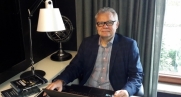
 Mirosław Żakowski
Szczecinbiznes.pl: How did you found LightArt?
Mirosław Żakowski: LightArt was established in 1999 - one could say that it happened on the spur of the moment. I started my own business back in 1992, but I was focused on construction-related activities. Then I began working for large companies from the sector - at a certain point I was offered to take key positions in two of them. However, it so happened that ultimately I was left stranded.
So one day when paying a visit to the Alchemia club in Cracow run by my brother, I started contemplating my future. I even came up with an idea to open a similar club in Szczecin, as Alchemia was at the time and still is among the most popular haunts in Cracow: it is a combination of a pub, the movies, a club, a gallery and a theatre scene. My brother however knocked the idea out of my head. By way of compensation, he showed me something else – a lamp for light formatting that he designed for his gallery. He sent me off with a box filled with some mechanical parts suggesting that it could interest me.
Did you have any knowledge in the area?
I was educated as a banking specialist and a technologist, and I did not know much about lighting. I took the box and I began to examine what was in it. I was not familiar with the market or the related technology but right away I was required, say, to draft technical specifications. I did everything by myself – I prepared my designs in MS Word and transferred them to subcontractors that made components for us, then we put all elements together - initially without any external assistance.
And the idea turned out to be a great success …
It transpired that only a few firms in Europe manufactured such projectors. Their products cost approximately EUR 1.5 thousand per item, whereas ours were several times cheaper – on average PLN 650 for one. We have managed to keep our prices at this level until today and we still remain the sole producer of this kind of equipment in Poland.
To be frank, we ourselves created the market for our products. We took it upon ourselves to make people aware how art should be displayed, to show it and to teach people a new way of seeing things. We tracked down the people who dealt with art, the managers of galleries and museums and the artists themselves, and then we showed them what we could do.
Were they quick to catch on?
Our first large exhibitions were displayed at the Alchemia club in 2003. The first one was by a famous Polish photographer and it was displayed in Szara kamienica in the main market square in Cracow. When the artist saw how his photographs were lit he bought several dozen lamps on the spot. At that time we began to contact public institutions which was not an easy task, as they usually worked within very severe financial constraints. The exhibition hosted by Zachęta Gallery of Art made a breakthrough – we prepared a show entitled “Warszawa-Moskwa" which was the largest event in 50 years.
After we accepted that particular commission we had to prepare several hundred of lamps within the span of two weeks. But it paid off, because afterwards many institutions recognized how important the lighting was. In the wake of the exhibition the largest museums and galleries in Poland and from abroad placed their orders. We regularly cooperate with institutions located in France, Germany, the U.S., Canada, Sweden, Lithuania, Latvia and Estonia. Now that we have managed to earn some renown, it is often the customers that seek our services.
How did it happen that a company domiciled in Szczecin has sold its products to one of the most famous museums in the world, namely the Museum of Modern Art in New York?
The exhibition you are referring to was arranged by our U.S. agent – our products were used on one floor of the building.
What are your domestic sales figures?
Our products were first sold in Cracow. For a very long period we practically did not enter into any transactions here in Szczecin – it seemed that in Szczecin there was no proper atmosphere, no awareness, no courage to make changes. Only two years ago things got going – we prepared the light setting for 13 Muz club, Pomeranian Dukes’ Castle, the High School of fine arts, the Academy of fine arts, as well as for private galleries: Open Mind and the Kapitańska gallery run by Calbud.
You offer more than just the product …
Gradually, we started extending our offer. We added professional advisory services, interior design, exhibition systems, selection and supply of multimedia, suspension systems and multimedia exhibition arrangements. Now we often work in liaison with designers and curators. Apart from the museum and exhibition market we also sell our products to individual customers, we manufacture products for apartments, stores and hotels – everything in the same technology based on aluminium processing. We primarily use aluminium in our settings, but we also add other materials, such as glass.
In addition, we manufacture lamp components for major stock-exchange listed companies in the industry, i.e. Elgo, Es-System and Lena Lighting. We supply components and semi-finished products to German, French and Czech manufacturers. Our production capacity is high and we have good ideas – hence we do our best not to let them go to waste.
What is the production process like?
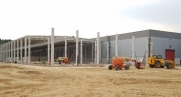
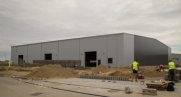
At first we relied on many subcontractors and their ready-made components were assembled in our plant. Some years ago we undertook to invest in our own machine fleet which proved a smart move. We acquired state-of-the-art CNC moulders, Alfa series, produced by DMG. I aimed at creating an automated all-inclusive production plant. The project is still alive, even though its development has been arrested by the economic downturn. Despite that, we produce all the components on our own. Our subcontractors are commissioned colouring and chromium-plating, while we ourselves do all the wet painting work.
We also prepare all the designs. Usually I create them with my designing team. For very important projects and major clients we are able to design the product and prepare the process flow within 14 days, which is extremely fast. Necessity is the mother of invention. Generally, the design work and analysis takes three – six months on average, in the western countries it may last up to 12 months.
What kind of transformations did the company undergo over the past twelve years of its business activity?
In 2006 we had an idea to transform the firm into a joint stock company and prepare for launching on NewConnect. It necessitated substantial additional investments and that is what I did. There were quite a few investors interested to buy stock in private placement. The estimated profit from share sales was to be circa PLN 15 million. Unfortunately, the 2008 economic crisis arrived and the investors backed out. This badly affected our business - one could say that we are still suffering from the consequences – among others, we had to reduce our staff (our current employment level corresponds to one third of our pre-crisis staffing).
Does that mean that you have completely dropped the idea to go public?
No. We continually receive proposals from the company that prepares IPOs. However, I expect one more crisis which may delay our plans. If there is no downturn in economy, we may be able to float on the stock exchange in two years, if there is one - in 4 or 6 years.
How about the nearest future?
There are several ways forward for us. First of all, we want to develop and specialize our division dedicated to preparation of exhibitions. Secondly, we plan to extend the apartment-related product offer and develop our machining services. In other words, we intend to extend and automate our machinery fleet. We believe that entering a large commercial network may also be a good decision. The opinions about our products given by a number of large networks seem to be very favourable – we have even been told that our lamps are too good.
Interviewed by Łucja Pawłowska