There is a lot of construction going on in Szczecin, but you can hardy call it a breakthrough
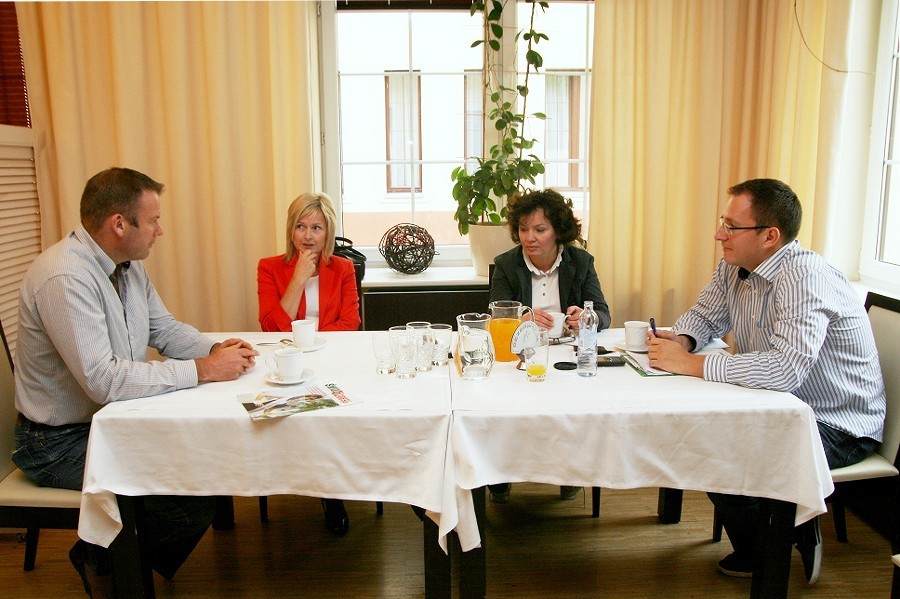 k. Nordbo, M. Kwiatkowska i I. Kołwzan
We begin our new series of chats with business people – micro-entrepreneurs, owners, heads of companies and managers. Every week we will be talking about current events, latest trends and phenomena taking place in Szczecin, in the region, in Poland and the world. As a portal about business for the business, we want to present the opinions of those who are involved in developing the economy of West Pomerania.
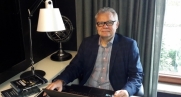
This week, we are discussing current affairs with Izabela Kołwzan, a designer with the company Glasmat, designing, making and ornamenting glass objects and designer glass, Małgorzata Kwiatkowska, a coach, owner of the company Business Training Center, and Kaare Nordbo, chairman of the personnel consultancy firm Segel Polska, proxy of the construction company Reinertsen Poland and regional representative of the Scandinavian-Polish Chamber of Commerce.
Szczecinbiznes.pl: Before we discuss the current affairs, could you please tell us what’s new in your firms?
Izabela Kołwzan: This year, we have completed two really big and impressive projects. Unfortunately, neither was in Szczecin. The first one involved the interior design of a spa at a hotel in Czarna, the second was a very big stained-glass roof window in a small castle owned by a private individual.
Małgorzata Kwiatkowska: What a perfect question for a holiday season. Actually, I admit that July was a very busy month for us. Like my colleague, I must admit that our clients are not from Szczecin, they are mainly from Warsaw. I have to add though that the number of local clients interested in soft skill training products has been on the increase recently. They are mostly new IT firms. August is definitely a holiday period in our industry, but it is also a time to prepare many new designs and offers. This month, we have been busy preparing many proposals for Szczecin. You will be able to see the results in September.
Kaare Nordbo: July was a very busy month for us, too. Trends in the HR business are very similar – local businesses are increasingly interested in using our services. They understand that we can help them reduce the risk of hiring the wrong people: we have the contacts, we know the market and we often get the best possible employees available. We also work with foreign investors, and they are not only from Scandinavia. We keep showing them that Szczecin has qualified and relatively inexpensive workforce. At present, we are launching new projects: two for Danish firms and one for a Swedish one. As regards the fourth project, the investor is still deciding between Szczecin and Poznań for the locations of his business. It has also turned out that he had no idea about the range of possibilities that Szczecin has to offer. Clients who need to rely on big logistic companies don’t know that we have companies such as DB Schenker operating here. Szczecin has probably lost a few foreign investors because they didn’t know what they could get here.
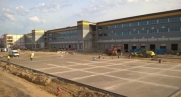
Speaking about investors, why don’t we talk about new investments that are visible in Szczecin now like never before. At least six new skyscrapers are under construction, new shopping centres are being built, including Kaskada, municipal investments are underway, such as the new philharmonic hall, a sports and entertainment hall, the new ZUT nanotechnology centre and the building of the Faculty of Management and Services Economics of the University of Szczecin is being expanded. Does all that mark a big breakthrough for Szczecin?
Izabela Kołwzan: For me personally, the change that is taking place in Szczecin is truly fascinating. Only a few years ago, my husband and I were wondering whether we should move to south Poland where all the major glass centres are located. But it was such a hard decision to make, especially for parents of a school-age child. So we stayed and I can tell you, I’m really glad we did. Perhaps all the change that is happening in Szczecin is not impacting my business today, but I hope that the city’s development will somehow raise people’s awareness and they will begin to appreciate beautiful, unique objects in their homes instead of mass produced supermarket merchandise. So, despite all those traffic jams and other inconveniences, I’m optimistic that it is all for the benefit of the city, which will be much nicer as a result.
Małgorzata Kwiatkowska: I keep asking myself the same question all the time: is it really a breakthrough or not? This is because I look at the city in two different ways. Firstly it is a place where people live and in this respect, it is very pleasant. Take me: I’ve chosen to live here even though I travel for work all over the country. And this is the place where I always come back to and I call it home. For that reason, I’m really happy to see all the cultural investments underway and I hope that a few interesting events will be added to the cultural calendar as a result. Secondly, it is a workplace. As regards office buildings, of course it’s all very positive they are being constructed. I only hope they’ll manage to secure enough tenants for all that office space and that companies will eventually move in. If that is what’s going to happen, the news couldn’t be better. Young people often tell me that they worry about their future after graduating; that it may not be that bright for them here. A lot of them leave, but more and more would be happy to stay if only they could get jobs here.
Kaare Nordbo: I wouldn’t call it a breakthrough. I’ve been here since 1994, which to me was the time when really a lot went on – there were many investors from Scandinavia, Germany. That was the breakthrough and a time when the differences between Szczecin and, say, Gdańsk, Wrocław or Poznań were not visible. Stagnation came later, in the late 1990s.
Today, you can find young IT specialists of engineers for very cheap in Szczecin, perhaps as little as half of what you’d have to pay them in Warsaw. It is sad on one hand, but attractive for investors on the other, because it’s a real opportunity for the city. So, what I think is the most important today is to promote the local higher education institutions. They have to show what they have to offer as regards the quality of their graduates.
There is one more interesting fact about Szczecin that I only found out myself very recently: Szczecin has the lowest debt out of all the big Polish cities. This means it can afford to borrow and spend a lot more than others. Other cities have reached their statutory credit ceiling, so this could really be our big moment. This, combined with a friendly local government open to investors, gives us hope that things will go in the right direction and the city will start moving forward.
Małgorzata Kwiatkowska: Speaking about higher education institutions in Szczecin, I’m really glad to hear they are attracting more and more students from other towns, which wasn’t the case only a few years ago. Let’s take as an example the MBA courses at the West Pomeranian Business School, which teaches students from Warsaw, Radom and Poznań. The movement towards Szczecin has become a new trend. It is very positive that we have something to offer.
The news came out recently that the company Eurolot is planning to launch air connections with Kraków, Wrocław and Rzeszów. Do you think they will be profitable, or is it going to be a fiasco? Mind that the connection with Kraków opened by Jet Air some time ago disappeared from the timetable only a month later.
Małgorzata Kwiatkowska: The idea is very nice, but I think the new services would be used mainly by businesspeople. It’s hard to say if tourists would choose to fly in from Kraków to Szczecin for a weekend. Personally, I would probably consider taking such a trip, maybe once. The important question to ask is what someone from Kraków would like to come to Szczecin for. What would he like to do and see here? It is an easy question to answer for those who travel to Kraków, but is the attraction of Szczecin as obvious to the average Polish tourist?
That’s true. I don’t think anyone has done any research into the perception of Szczecin among people from Kraków...
Izabela Kołwzan: The average Cracovian probably knows that Szczecin is situated by the sea and that you can get to the beach by tram... But seriously, what Szczecin really lacks is a proper, big marina. If we had one, people from Kraków, Wrocław or Rzeszów would be much more likely to come here to do a bit of sailing in the Bay of Szczecin or Dąbie Lake. They could even bring their own boats…
Małgorzata Kwiatkowska: I has just occurred to me that the price of a flight from, say, Kraków could include a hydrofoil trip to Świnoujście. That could be a very attractive offer.
Kaare Nordbo: Yes, they are. There are two flights a week to Oslo. For me that number is a bit pathetic, especially in the context of the breakthrough we were discussing a while ago. In the 1990s, there were two connections a week with Copenhagen alone! Now they’re all gone. One daily connection with Oslo and one with Copenhagen would mean we’ve seen some progress. The truth is Szczecin has much poorer communication with the world today than it had 15 years ago. In terms of tourism, I think Scandinavia would be a better direction for development than Kraków or Rzeszów. What could people from those cities find in Szczecin that they cannot find in their home town?
Małgorzata Kwiatkowska: Well, what will Scandinavians find here?
Kaare Nordbo: They’ll come here for healthcare services, general shopping plus all the sightseeing they can do in the meantime. Sure, as regards culture, Szczecin has much less to offer than Kraków, but not necessarily less than Norway. The cathedral in Szczecin can really impress Scandinavians, but not the people from Kraków. And medical tourism has the best potential, because the prices of healthcare services are about fifty percent cheaper here than in Scandinavia, and their quality is quite high.
Will the new airport that is about to open near Berlin next year be a chance for Szczecin? It will be so easy to give directions to the city: we are only 150 km from BBI, one of the biggest airports in Europe.
Kaare Nordbo: I think the distance is a little too long to attract tourists. Why go to Szczecin if you are in Berlin?
Szczecin will become a tourist destination when Berliners begin to visit us on a big scale, when they begin to pop over for weekends. That will only begin to happen when we have to offer something that they don’t have at home.
Izabela Kołwzan: I’ve been hearing stories about Szczecin’s potential all my life. Every new local government tells them to us and then they end up doing nothing. It’s become our curse.
Another hot topic – the firm Tomaszewicz Development is planning to develop a shopping centre near Szosa Polska street, which would be the first shopping mall in the northern part of the city. Will this investment herald development of the North Szczecin?
Małgorzata Kwiatkowska: I like riding a bicycle and recently, I cycled to Stołczyn and Skolwin. I didn’t see much change there in general, but I spotted a few new residential developments here and there. It is a good sign, because locals will begin to mix with newcomers and the districts will cease to be a civilizational backwater of Szczecin. Each new investment project there will be a step forward.
Izabela Kołwzan: As far as I‘m concerned, although I don’t agree with the idea of development through construction of supermarkets, I’m all for residential development in those areas. But speaking of shopping centres and supermarkets, at least their development is an opportunity for local companies.
Małgorzata Kwiatkowska: I’m not a great fan of such places or shopping there either, but I’m sure they have a positive impact on the city in the context of its development, because such places are attractive for many people and they can attract for examples Norwegians, as you have mentioned before.
Kaare Nordbo: We can’t say Szczecin has too many shops or shopping malls. Due to its location, historically, it has always been and should continue to be a commercial centre. Trade should be one of Szczecin’s key industries alongside the maritime industry, which I will always associate with Szczecin.
On the subject of maritime economy: there have been rumours that some companies are planning to launch large-scale production on the premises of the former shipyard.
Kaare Nordbo: I think the premises of the former shipyard are the most precious plots of land in Szczecin. I am convinced that in 30 years’ time that part of the city will resemble parts of Oslo, Malmö or London – full of residential buildings and all types of services. But we have to be patient. What is happening in the shipyard now is positive. Instead of one big, we have many small companies investing there. Monoliths are never a good solution. Private capital with a little bit of innovation can create twice as many jobs there than the three thousand that the shipyard used to provide in the past. I will keep repeating that the bankruptcy of the shipyard was the best thing than could happen to Szczecin. At first nobody agreed with me on that and now no one disagrees with me. What was the point of a shipyard that wasn’t profitable? The land should be made available to those who have money and ideas.
Likewise, revitalisation of the city centre could be possible if only the city would let go of the idea of council housing there. That’s an absurd to me. The city has no money for investments whereas Germans and Norwegians are dying to buy those residential buildings and invest in them. But they won’t pay PLN 3,000 per square metre; they are ready to buy them at a reasonable price and invest in their complete refurbishment. That will create new jobs and the city centre will be nice.
Małgorzata Kwiatkowska: I’m afraid we have to grow up mentally before we manage to do that.
Now, to conclude on a lighter note, let’s talk about the weekend. How are you going to spend it and what can you recommend to the readers of Szczecinbiznes.pl?
Małgorzata Kwiatkowska: As I said, I ride a bicycle a lot. Lately we’ve been enjoying the charming combination of Polish and German cycling paths. In particular, I can recommend a trail we discovered not long ago: follow the paths from Warszewo, through the Wkrzańska forest, to Dobieszczyn where you can cross over to Germany; then continue through Glashütte, Blankensee to the border in Buk and then back to Szczecin via Dobra Szczecińska. The distance is about 80 km. It’s a really wonderful trip on which you can enjoy very tasty sausages on each side of the border.
Kaare Nordbo: I’m going to go to the aquapark in Gryfino while I wait for a new one to be built in Szczecin.
Izabela Kołwzan: If it’s cold, I’ll probably go to a spa to get warm. If the weather is nice, I’d recommend a walk around the Głębokie Lake. I like that place. After that walk, you can feel every single muscle in your body.
Thank you for your time
Interviewer Michał Abkowicz
Photography KZ
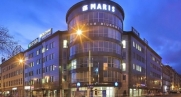
Venue: the Focus Hotel in Szczecin