Anti-Cancer Diet of Szczecin Company
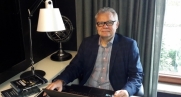
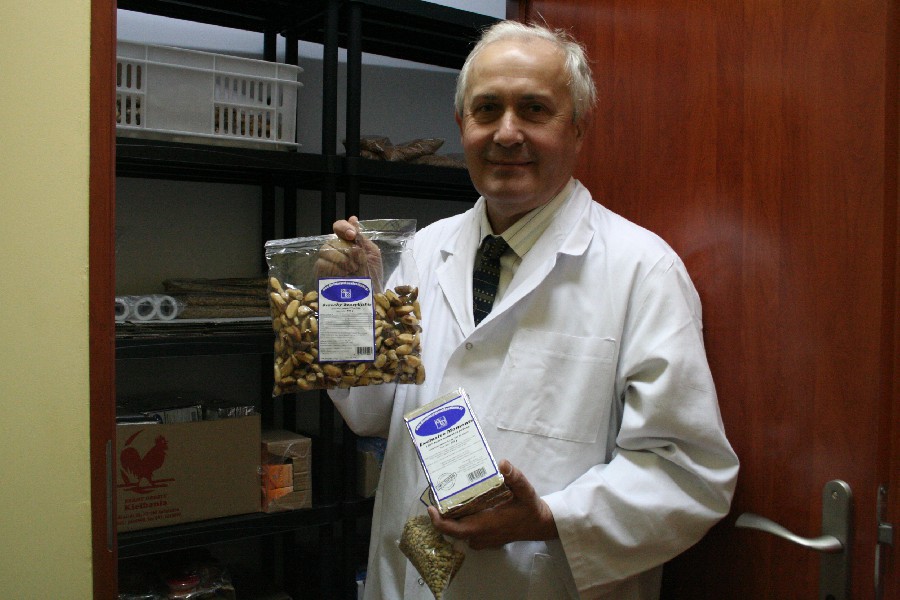 Professor Jan Lubiński /fot. PŁ/
The products (which now amount to approx. a hundred, including water, juice, coffee, bread, meat and dairy products) are sold via the www.dietaantyrakowa.pl website. The offer is addressed to the women who run a higher risk of developing breast and ovarian cancer, and will be expanded in future. We have talked to Professor Jan Lubiński, CEO of Read-Gene SA.
Szczecinbiznes.pl: You have launched an e-shop with special food products on the www.dietaantyrakowa.pl website. How does it work?
Professor Jan Lubiński: Yes, we offer products with a specific and specified amount of selenium which are not sold in regular shops. We have already got around a hundred products and the number is going up. We have also secured the designation of selenium in food products with a special patent application. The patients of our clinic are asked to consider reducing the risk of developing cancer by controlling the amount of selenium in their diet, if they are with the BRCA1 gene mutation which increases the chance of developing ovarian and breast cancer.
Our tests have shown that the risk of developing cancer can be greatly reduced as the hormonal status is matched with genes responsible for selenium metabolism and with the right concentration of selenium in the body. Taking a group of women with the BRCA1 gene mutation (its occurrence is related to the risk of developing ovarian and breast cancer) we can identify 20 percent of women whose genetic system - at over 80 micrograms of selenium a litre - allows to reduce the risk of developing cancer by 30 times! This means that out of a hundred women, not 80, but two or three will develop cancer. A much larger group requires the level of selenium between 60 and 80 micrograms. In their case we can reduce the risk by five times, which is also a great success. In the case of 65 percent of women after menopause keeping a certain level of selenium reduces the risk of developing cancer by 16 times.
Therefore, at Read-Gene we analyze functional food which has special qualities that regulate the level of selenium in the body. These are the first such discoveries in the world and they are subject of our patent work carried out on a global scale.
Where do the products come from and how are they processed?
Our suppliers are primarily small producers. Those from our region include e.g. Asprod (bread), Cymes (drinks) and Masar (meat and cold meats). We looked for producers which carefully control the production cycle from the beginning to the end. The point is to analyze the level of selenium, which is very expensive, as seldom as possible. The majority of products is manufactured in accordance with our patents. Regulation of the level of selenium involves e.g. the right selection of ingredients. E.g. our supplier of meat and cold meats is working on a low-selenium frankfurter.
Let’s move to business: how do you make money?
From the very beginning I’ve been emphasizing that the target area of business for Read Gene will be chemoprevention i.e. what our team has been working on for nearly 15 years. Chemoprevention is the use of diet supplements or only diet to reduce the risk of developing cancer. Of course, in order to have ongoing revenue and profit we deal with DNA testing, clinical trials and consultations. But we primarily invest in chemoprevention and soon we will be seeing effects as we are just about to file a breakthrough patent application concerning the link between the level of selenium in the body and the occurrence of one of the most common cancer. We focus on formulating the right anti-cancer diet and thanks to the latest discoveries the number of our potential addressees will increase to several million people only in Poland.
What profits will we be talking about?
If we assume that following our latest patent we will have one million clients and each of them pays PLN 100 for their shopping, we will have revenue of PLN 100 million. Clear profit will be approx. 20 percent. In two or three years, when our projects swing into action, this will be how much Read-Gene should make a year. Already at the time of flotation I intended and said it out loud that within five-ten years our profit will reach PLN 10-15 million. My estimates were some six months late. I thought that patients will have access to the diet in mid 2010. However, in the long run the delay is slight. The most important and most difficult thing is to reach as many clients as possible. This was our strategic goal which, following the latest discoveries related to different types of cancer, is feasible.
Are you planning to enter foreign markets?
Of course, the opportunities are great but I’ve learnt that one needs to be well organized and have a lot of capital. Therefore, we don’t want to speed things up. Firstly, for two-three years we want to strengthen our position in Poland.
By Paulina Łątka